In my lab we developed Global Biobank Engine to support the visualization and search of genetic association results from UK Biobank. Prof. Euan Ashley called it the Google Maps of the Genome in his book. Global Biobank Engine’s design was inspired by the ExAC browser, which summarized exome sequencing data from over 100k individuals.
Now, there are multiple browsers online including from Finland, the FinnGen browser, which makes available results from their analysis of genetic integrated with medical record data from 500k Finns.
With the release of the ChatGPT Atlas browser we can now automate some of the process of exploring therapeutic hypotheses guided by human genetics, our North Star.
Cavemen learning from a brilliant mind, i.e. exploring their fire.
Here, I show you how I used ChatGPT Atlas with AI agent mode to explore these browsers and come up with therapeutic hypotheses. The AI agent does the work itself. It’s an exploration, but interesting nonetheless. I’m impressed with its capabilities. It took 11 minutes while I drank coffee and listened to music. BTW, the make no mistakes prompt is in jest.
Epilepsy is a chronic neurological disorder characterized by recurrent seizures. There are many epilepsy subtypes which warrants different approaches to treatment.
Understanding the molecular mechanisms of epilepsy provides a precision medicine guided approach to treating the disease.
To that end, we’ve developed a unified meta regression model that incorporates multiple moderators when analyzing the latest exome sequencing genetic data generated and provided by the Broad Institute.
There are three epilepsy types we study:
Developmental and epileptic encephalopathy (DEE, N=1,938),
Genetic generalized epilepsy (GGE, N=5,499), and
non-acquired focal epilepsy (NAFE, N=9,219)
as well as the full the full epilepsy cohort (EPI, N=20,979) that we compare against 33,444 controls.
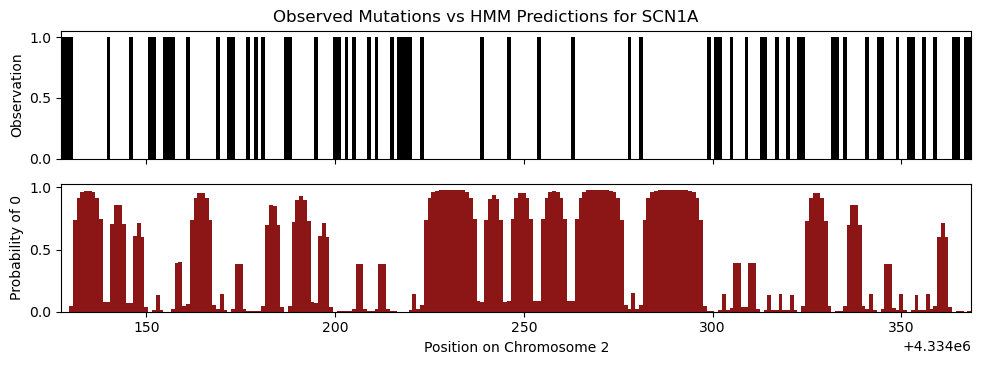
We incorporate concepts like: genome constraint, i.e. where the genome is intolerant to mutations, a concept pioneered by Dr. Kaitlin Samocha. If you want to listen to constraint in the genome please see our blog post where we sonify constraint. The concept is asking the question does information about your neighbors tell me about you. The Hidden Markov Model enables us to get a per site constraint probability.
Genome constraint for SCN1A. Sites that are intolerant to mutations are informed by their neighbors.
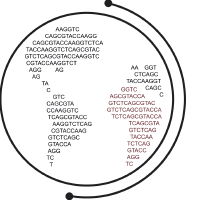
loss-of-function, i.e. whether a mutation is predicted to break the function of a gene.
Depiction of protein truncating variants or predicted loss-of-function variants and their systematic study using transcriptome data.
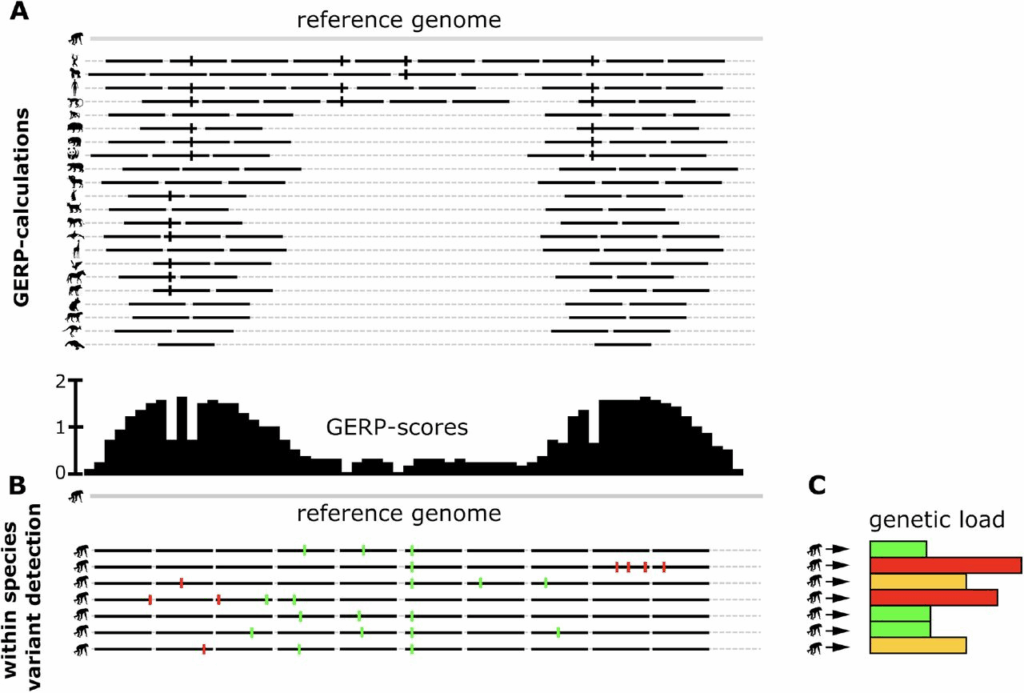
Genomic Evolutionary Rate Profiling (GERP), which quantifies evolutionary constraint which compares the number of mutations observed at a particular position compared to what we expect under neutrality. The larger the GERP score the more likely it is constrained and the lower the GERP score the more likely it is neutral or under positive selection.
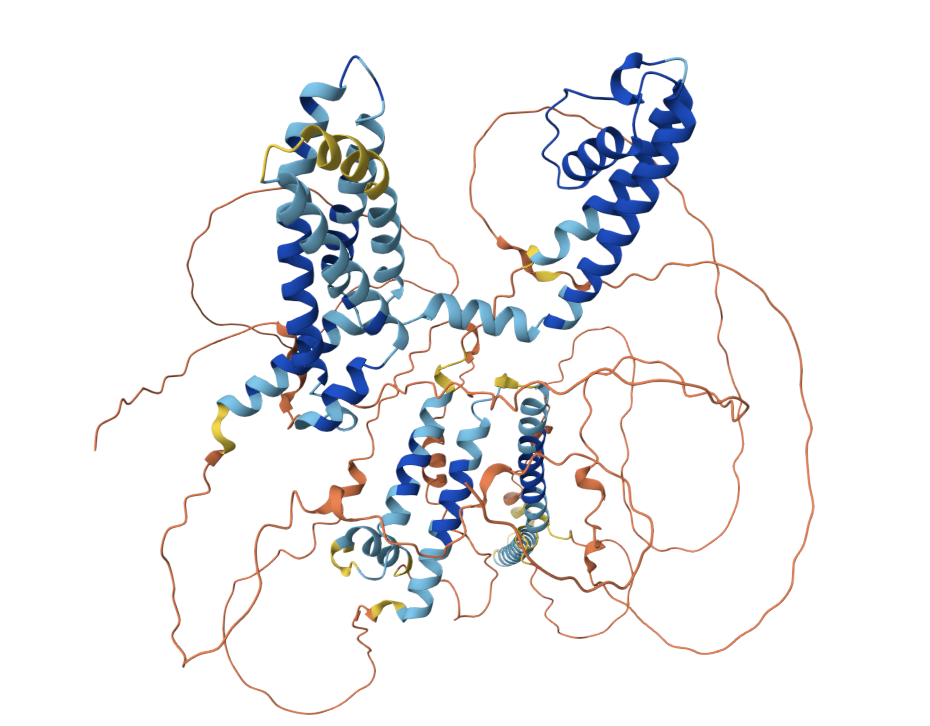
Impact of missense variants on protein-folding via the AlphaMissense score.
KCNQ2 3D experimental structure with the AlphaMissense scores overlayed (dark blue is higher AlphaMissense score, i.e. likely to be deleterious).
Results
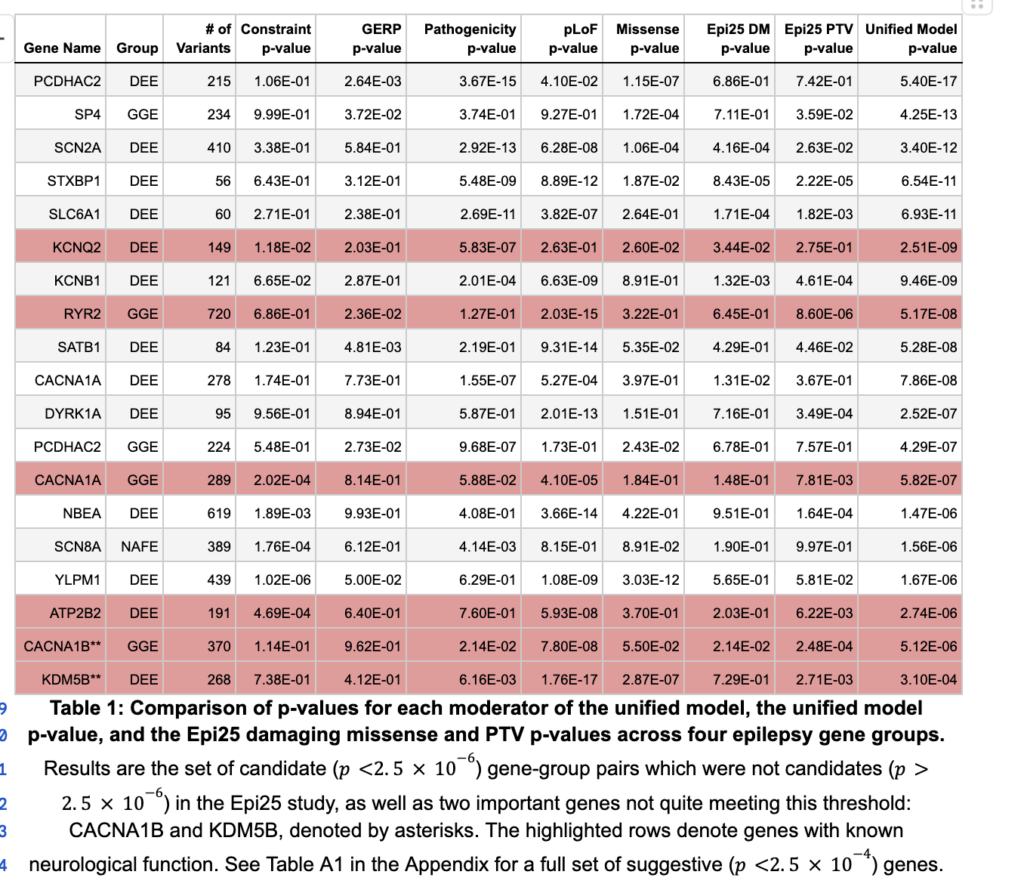
We identify 14 new epilepsy genes that have stronger evidence of association than the Epi25 paper.
About a year ago I had a bike accident where the only memories formed were leaving the house and ending up in an ambulance. I have to admit it was a scary experience not knowing how or why I ended up the way I did.
This experience got me thinking about memories: i) where are they stored? ii) how are they formed?
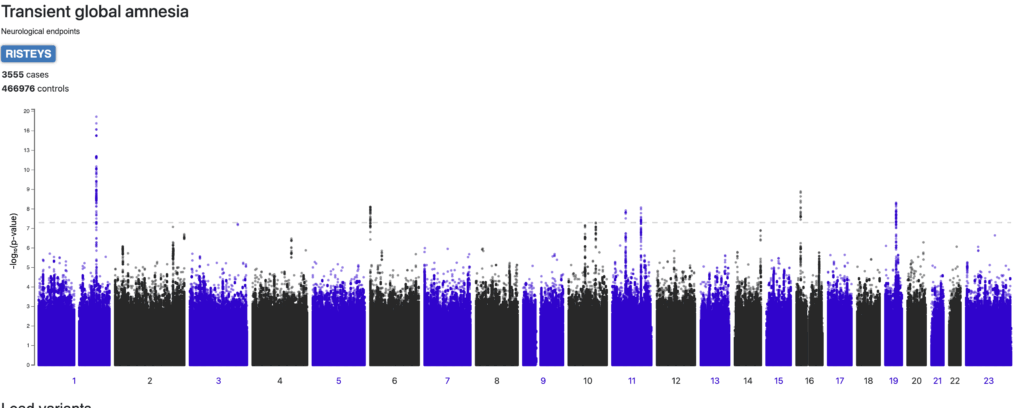
I shared with Mark Daly about this experience and he mentioned that there was a peculiar phenotype, transient global amnesia, in FinnGen, the population biobank of the Finnish population, that has stunning genome-wide association results. For one the associations seem to be specific to the phenotype and were not shared by other phenotypes, and two the phenotype had many towers, i.e. evidence of genetic variants associated to the phenotype.
Transient global amnesia, is a neurological phenotype, where people are not able to form memories over the course of 24 hours.
To read more about our research on transient global amnesia please see our paper.