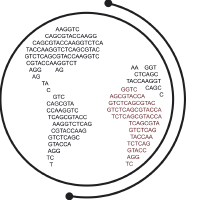
We have adapted Univariate guided lasso for genome-wide prediction in population-scale biobanks (see publication here in PLoS Genetics).
See blog post from the Department here.
We have adapted Univariate guided lasso for genome-wide prediction in population-scale biobanks (see publication here in PLoS Genetics).
See blog post from the Department here.
For multiple human diseases, genetic exome browsers are made available. These resources allow researchers to download, analyze, and interpret their findings. Agentic AI opens up a new opportunity for re-analyzing these datasets.
Here, I show that we can use LLM-informed priors for human genetic discovery. We apply it to schizophrenia, autism, epilepsy, inflammatory bowel disease, and obesity exome sequencing results.

Using literature-informed priors assembled with LLM assistance, our primary analyses brought eight gene–phenotype associations above the model-based 95% posterior probability threshold. In epilepsy, these included NPRL3 (99.92%) and SYNGAP1 (99.08%) for broad epilepsy, and STX1B and WDR45 (99.18% each) for developmental and epileptic encephalopathy. Their historical support points to distinct biological mechanisms: NPRL3 helps restrain mTOR signaling, with human mutations implicated in focal epilepsy, while SYNGAP1 loss-of-function variants cause neurodevelopmental disorders frequently accompanied by epilepsy. STX1B participates in communication between neurons and has been implicated in fever-associated epilepsy; WDR45 links autophagy – the cell’s recycling machinery- to severe developmental epilepsies. In the body mass index analysis, PCSK1 rose from 67.63% to 97.71%. It encodes a hormone-processing enzyme, and previous human genetic studies connecting impaired PCSK1 function to obesity provide a biological rationale for its elevated prior.
For autism, the additional crossings were SHANK2 (98.11%), NRXN1 (97.96%), and SETD5 (99.54%). SHANK2 and NRXN1 support synaptic organization and communication, while SETD5 regulates developmental gene expression; earlier genetic and functional studies connect these processes to autism and related developmental disorders.
Website of our findings can be found here.

I’m currently working on a few textbook projects aided by AI Astra model:
1. Learning from waves to detect localized effects. This goes into electrocardiogram data.
2. Spherical harmonics. Using it for regression and modeling multiscale data.
3. Mind reading. Using world foundation models to read minds across time and space.
I’ll post updates as I go.
